Jump to:
TLDR – Quick Guide
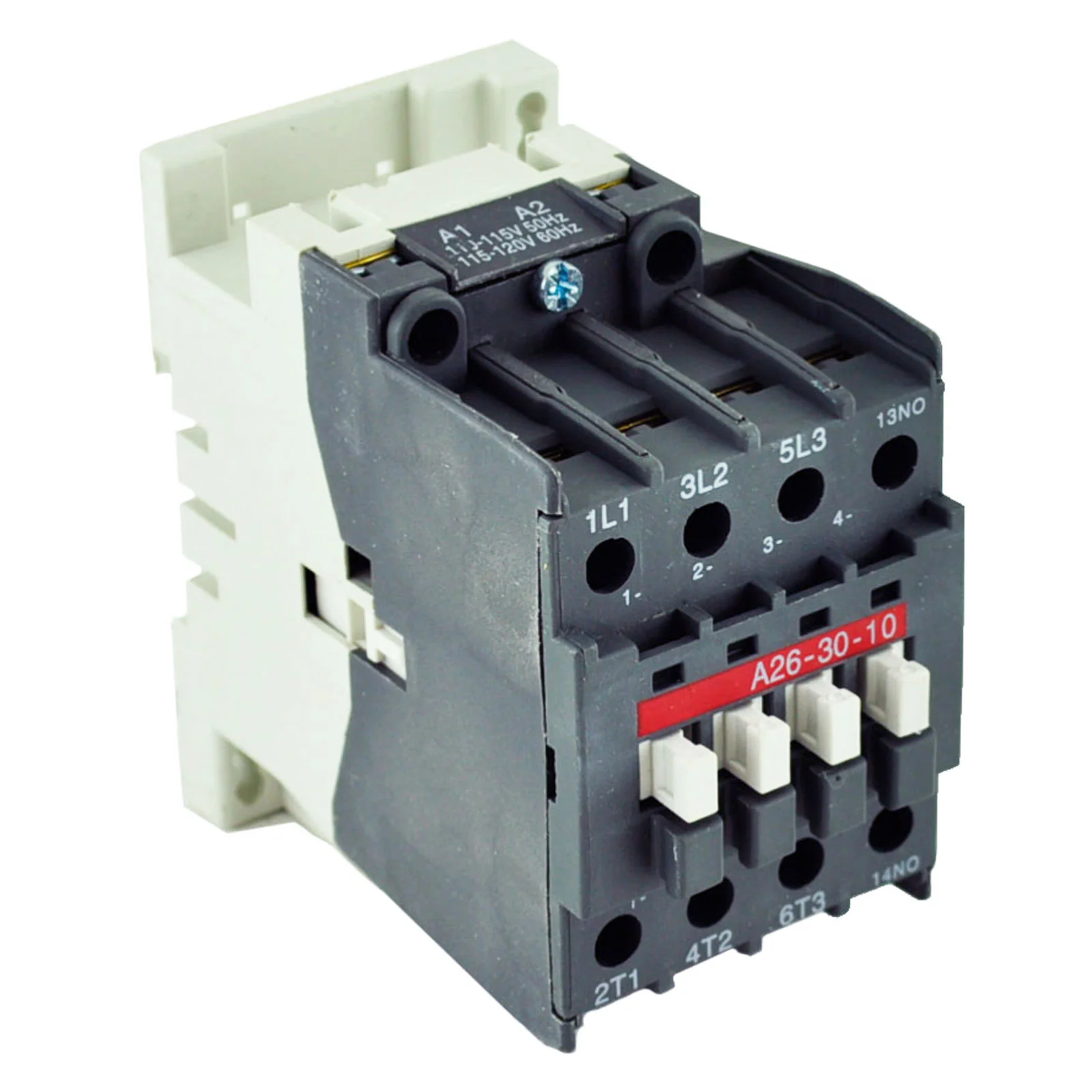
- The ABB A26-30-10 is a fully specified contactor rated for 26A, ideal for small industrial motors.
- The A50-30 is a base model rated for 50A that requires additional configuration (e.g. auxiliary contacts and coil voltage) to be fully specified.
- A26-30-10 is compact and suited for control panels with limited space and moderate load requirements.
- A50-30-based contactors, such as the A50-30-11, are better for high-load applications like compressors, conveyors, or large HVAC units.
- Both support DIN rail mounting and compatible accessories but differ in size and current capacity.
- BRAH Electric offers cross-reference support and aftermarket contactor replacements designed for 1:1 compatibility.
Detailed Breakdown
A Quick Overview of Each Contactor
Let’s look at both models side by side:
ABB A26-30-10 Contactor
- Rated for 26A (AC-3 at 400V)
- Coil options include 24V, 110V, and 220V AC
- Comes with 3 main NO contacts and 1 NO auxiliary contact
- Compact, ideal for panels with limited space
- Best used for motors up to 11kW at 400V
ABB A50-30 Contactor
- Rated for 50A (AC-3 at 400V)
- Supports larger coils, often used in higher voltage control systems
- Also features 3 NO main contacts, no built-in auxiliary in some models
- Heavier and slightly larger footprint
- Ideal for motors up to 22kW at 400V
Key Differences to Consider
- Current Rating & Load Capacity
The most critical difference is the amperage. A26-30-10 is limited to 26A, making it unsuitable for high-demand motors. In contrast, A50-30 can handle nearly double the current. - Application Type
Use A26-30-10 for general-purpose control systems, fans, or small pumps. Use A50-30 when operating compressors, industrial mixers, or other high-load machines. - Size & Panel Compatibility
If panel space is a concern, the A26-30-10 is more compact and easier to install. The A50-30 may require more planning and space in enclosure design. - Wiring & Accessories
Both use standard DIN rail mounting and are compatible with overload relays and auxiliary blocks. However, some accessories may vary based on the frame size.
When to Use Each Contactor
Use A26-30-10 When:
- Your motor load is under 11kW or 15HP
- You need to save space in a control panel
- Operating equipment that cycles frequently under light to moderate load
Use A50-30 When:
- You’re powering large motors or systems exceeding 20kW
- You need a contactor rated for higher durability under load
- The system demands longer runtimes and more thermal endurance
If you’re unsure which one to use, BRAH Electric’s technical support can help cross-reference your needs with our product catalog.
Aftermarket Alternatives & Support
OEM replacements for ABB contactors can be costly or delayed, especially for high-demand models like these. Fortunately, BRAH Electric offers direct-fit contactor replacements built to match OEM performance. Every replacement is backed by a 2-year warranty, giving your team extra assurance during installation and operation.
Our motor control section features various replacements for both low and high amperage applications, including coils and overload relays.
Key Takeaways
- The ABB A26-30-10 is a 26A contactor ready for use, while A50-30 is a base model that must be specified further for coil voltage and auxiliary contacts.
- Use A26-30-10 for compact panels and moderate loads; choose an A50-30 variant like A50-30-11 for higher current systems.
- Be cautious when selecting A50-30 models, as incomplete specs can lead to compatibility issues.
- Always review datasheets or speak with a technical expert when selecting or replacing contactors.
- BRAH Electric offers trusted aftermarket options and expert support to help you get the right part the first time.
FAQs
Can I use A50-30 in place of A26-30-10?
Only if your system requires a higher current rating. Otherwise, it may be overkill in terms of size and cost, and could cause wiring complications.
Are both models compatible with the same accessories?
Generally yes, especially for coil voltages and auxiliary blocks, but always check the frame size compatibility and product datasheets.
What’s the main reason to upgrade from A26-30-10 to A50-30?
You should upgrade when your system’s load increases, or if you’re installing new equipment that draws more current than the A26-30-10 is rated for.
Do aftermarket replacements affect system performance?
Not if they are sourced from a trusted manufacturer like BRAH Electric. These parts are designed to meet or exceed OEM standards.
Is technical support available to help with cross-referencing?
Yes, BRAH Electric provides customer support and catalog tools to help verify correct contactor replacements and accessories.


