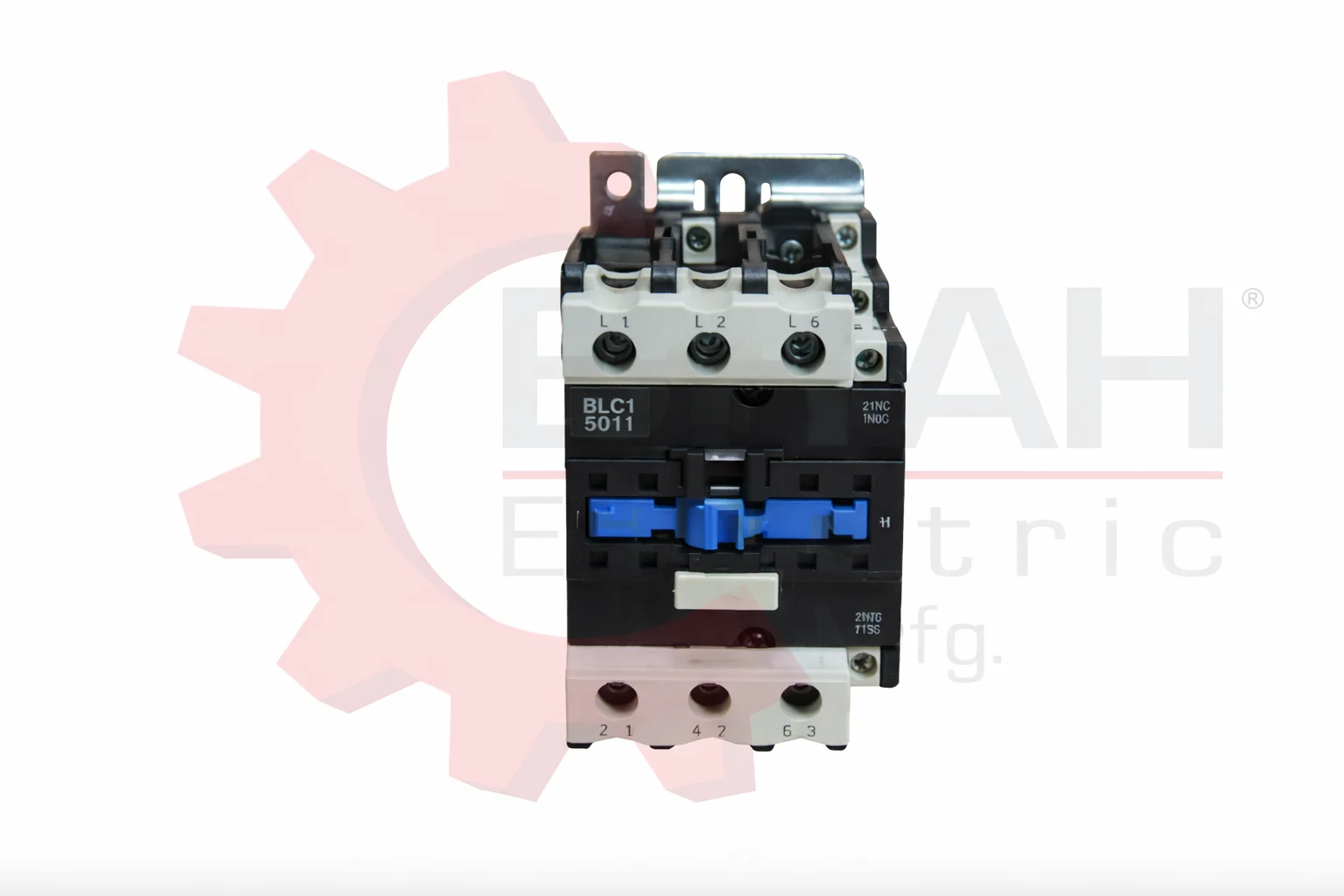
TLDR - Quick Guide
- Confirm motor full-load amperage (FLA) from the nameplate
- Match overload relay adjustment range to motor FLA
- Verify mechanical compatibility with the LC1D5011 replacement
- Confirm trip class (Class 10, 20, or 30) matches application
- Ensure auxiliary overload contacts are wired properly
- Perform load testing after installation
Detailed Breakdown: LC1D5011 Telemecanique Replacement Overload Pairing
Step 1 - Identify Motor Full-Load Amperage (FLA)
The foundation of proper lc1d5011 telemecanique replacement overload pairing is the motor nameplate.
Locate and verify:
- Full-load amperage (FLA)
- Service factor
- Voltage rating
- Phase configuration
- Duty cycle
The overload relay must be sized according to the motor’s actual FLA - not the contactor rating. Oversizing reduces protection. Undersizing causes nuisance trips.
Always use the motor data as your baseline.
Step 2 - Select the Correct Overload Adjustment Range
Overload relays have adjustable current ranges. The selected relay must include the motor’s FLA within its adjustment window.
For example:
- If the motor FLA is 48 amps, choose a relay adjustable within approximately 45-50 amps.
- Avoid selecting a range that barely covers the FLA, as calibration tolerance may reduce accuracy.
Accurate adjustment range selection ensures the overload responds appropriately to sustained overcurrent conditions without unnecessary shutdowns.
Step 3 - Verify Mechanical Compatibility with LC1D5011 Replacement
Not all overload relays mount directly onto every LC1D5011 replacement body. Mechanical alignment must be confirmed.
Check for:
- Direct snap-on compatibility
- Mounting bracket alignment
- Terminal interface alignment
- Enclosure clearance
Improper mechanical pairing can cause loose connections or prevent proper electrical continuity between the contactor and overload relay.
A correct lc1d5011 telemecanique replacement overload pairing ensures secure integration between both devices.
Step 4 - Confirm Trip Class Selection
Trip class determines how quickly the overload reacts during overload conditions.
Common trip classes include:
- Class 10 (standard motors)
- Class 20 (high inertia loads)
- Class 30 (long acceleration applications)
Selecting the wrong trip class can cause either premature tripping or delayed motor protection.
Match the trip class to the motor’s startup characteristics and load profile. This step is critical in lc1d5011 telemecanique replacement overload pairing.
Step 5 - Check Ambient Temperature Considerations
Overload relays are temperature-sensitive devices.
Evaluate:
- Ambient panel temperature
- Ventilation inside enclosure
- Proximity to heat-generating equipment
High temperatures can affect trip calibration. Some overload relays offer temperature compensation features, which may be necessary in demanding environments.
Ignoring ambient conditions can compromise overload accuracy.
Step 6 - Wire Auxiliary Contacts Properly
Overload relays typically include normally closed (NC) auxiliary contacts for control circuit interruption.
Verify:
- Proper integration into the stop circuit
- Correct terminal identification
- Secure wiring connections
- Control voltage compatibility
If auxiliary contacts are miswired, the motor may continue running during an overload event - defeating the purpose of protection.
A correct lc1d5011 telemecanique replacement overload pairing includes verifying the full control circuit integration.
Step 7 - Adjust Overload Settings Precisely
After installation, set the overload relay dial to match the motor FLA.
Adjustment best practices:
- Set slightly above nameplate FLA if service factor allows
- Avoid exceeding manufacturer recommendations
- Document final setting for maintenance records
Precision adjustment ensures the overload reacts to sustained overcurrent conditions without false trips.
Step 8 - Perform Controlled Load Testing
Before returning to full production, perform structured testing.
Testing should include:
- Monitoring motor startup current
- Measuring running amperage
- Observing trip behavior
- Verifying reset function
- Checking for excessive heat
Testing confirms that the lc1d5011 telemecanique replacement overload pairing is functioning correctly and protecting the motor as intended.
Common Overload Pairing Mistakes
Avoid these frequent errors:
- Sizing overload to contactor rating instead of motor FLA
- Ignoring trip class requirements
- Failing to confirm mechanical fit
- Miswiring auxiliary contacts
- Skipping post-installation load testing
These mistakes can lead to premature motor failure or chronic nuisance tripping.
Key Takeaways
- Proper lc1d5011 telemecanique replacement overload pairing starts with the motor nameplate FLA
- Adjustment range must fully cover the motor’s operating current
- Mechanical compatibility between contactor and overload is essential
- Trip class must match motor startup characteristics
- Accurate setting and load testing ensure reliable protection
FAQs
1. Should the overload be sized to the contactor or the motor?
Always size the overload relay to the motor’s full-load amperage. The contactor rating only reflects switching capacity. Motor protection is based on actual motor current requirements.
2. What happens if the overload range is too high?
An oversized overload may not trip during sustained overcurrent conditions. This can allow the motor to overheat and suffer insulation damage. Proper range selection ensures adequate protection.
3. How do I know which trip class to choose?
Trip class depends on motor startup time and load type. Standard motors typically use Class 10, while high-inertia loads may require Class 20 or 30. Review motor application characteristics before selecting.
4. Can I reuse the existing overload relay with a new LC1D5011 replacement?
Possibly, but mechanical and electrical compatibility must be verified. Ensure mounting alignment and current range are correct. If specifications differ, replacement may be necessary.
5. Why is load testing important after overload pairing?
Load testing confirms that the relay trips appropriately under real operating conditions. It also verifies proper control circuit integration. Skipping testing increases the risk of undetected protection issues.


