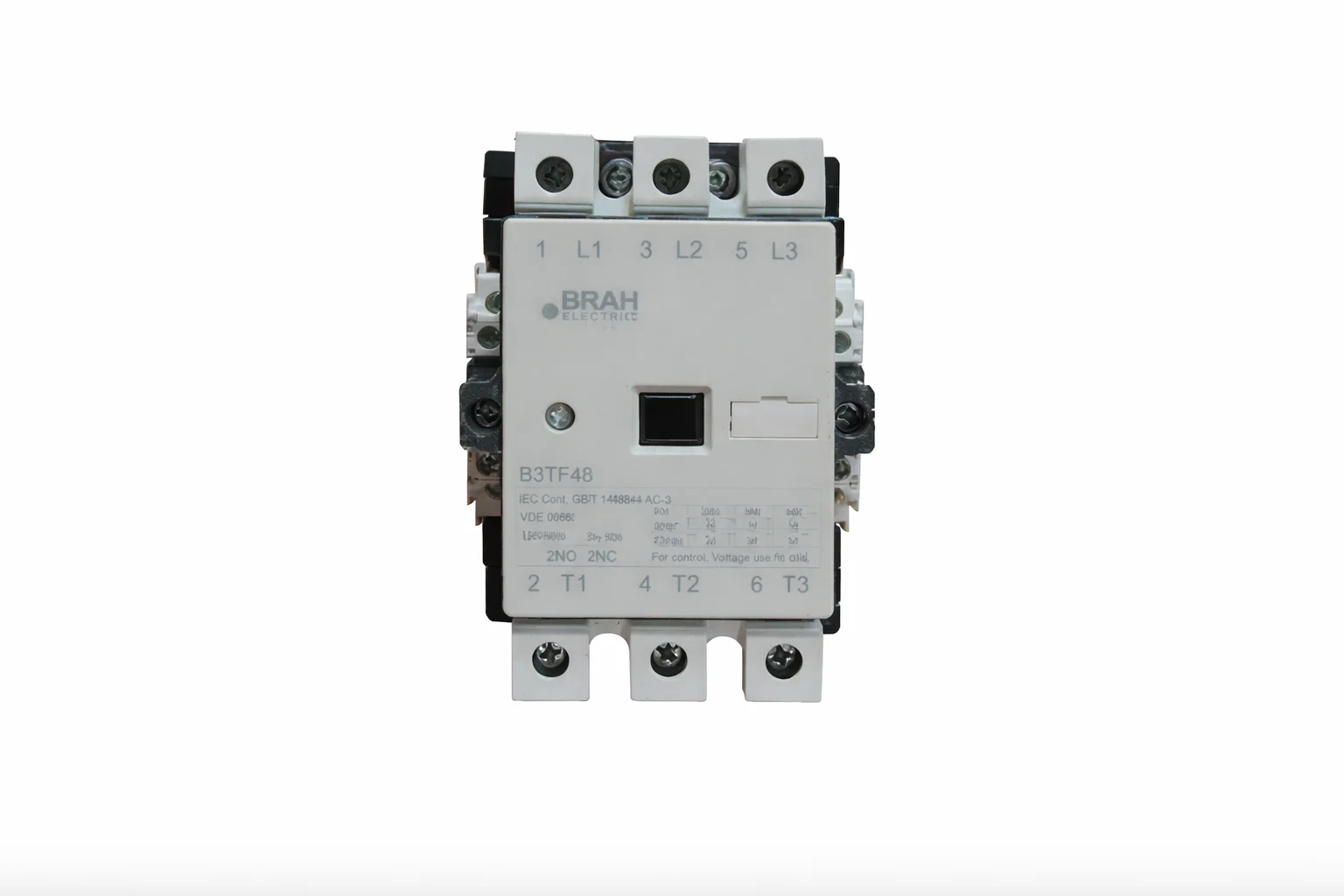
TLDR - Quick Guide
- Identify your control circuit voltage before ordering
- Confirm AC vs DC coil type
- Match frequency (50/60 Hz for AC coils)
- Verify control transformer output rating
- Check voltage drop across long control runs
- Test coil energization before returning to full operation
Detailed Breakdown: Siemens 3TF48 Replacement Coil Voltage Selection
Step 1 - Identify Your Control Circuit Voltage
The most important part of siemens 3tf48 replacement coil voltage selection is determining the actual control voltage supplied to the contactor.
Common control voltages include:
- 24V AC
- 24V DC
- 120V AC
- 240V AC
- 480V AC
Do not assume the voltage based on panel labeling alone. Use a calibrated multimeter to measure the voltage across the existing coil terminals (A1 and A2) before removal.
Incorrect assumptions are the leading cause of replacement failure.
Step 2 - Confirm AC vs DC Coil Type
AC and DC coils are not interchangeable.
An AC coil:
- Relies on alternating magnetic flux
- Is designed for specific frequency operation
- Produces characteristic hum when energized
A DC coil:
- Requires steady direct current
- Has different internal winding characteristics
- Will overheat quickly if connected to AC power
A proper siemens 3tf48 replacement coil voltage selection must match both voltage and current type. Mixing AC and DC configurations can result in immediate coil failure.
Step 3 - Verify Frequency Compatibility
For AC coils, frequency matters.
Most industrial systems operate at:
- 50 Hz
- 60 Hz
Some coils are rated for dual-frequency operation, but not all are. A mismatch in frequency may reduce magnetic holding strength and cause contact chatter.
Always confirm the coil’s frequency rating matches the facility’s power supply.
Step 4 - Evaluate Control Transformer Output
Many Siemens 3TF48 installations use a control transformer to step down voltage.
Inspect:
- Transformer primary voltage
- Transformer secondary output
- VA rating
- Wiring integrity
If the transformer output is unstable or overloaded, the contactor may not energize consistently. Voltage sag under load can cause repeated coil dropout and mechanical wear.
Proper siemens 3tf48 replacement coil voltage selection includes confirming the health and capacity of the control transformer.
Step 5 - Consider Voltage Drop in Long Control Runs
Long control wiring runs introduce resistance and voltage drop.
This is especially relevant when:
- Control wiring spans large facilities
- Wire gauge is undersized
- Multiple devices share the same circuit
If measured voltage at the coil terminals is lower than expected, you may need to address wiring issues before installing the replacement. Low voltage conditions lead to weak pull-in force and contact chatter.
Step 6 - Review Environmental Conditions
Environmental factors influence coil performance.
Consider:
- Ambient temperature
- Ventilation within enclosure
- Vibration levels
- Dust or contamination
High temperatures increase coil resistance and may reduce holding strength. Selecting a properly rated coil for the operating environment ensures stable performance over time.
Step 7 - Perform Controlled Energization Testing
After installation, conduct controlled testing before returning the system to full production.
Testing should include:
- Measuring voltage at A1 and A2 during energization
- Listening for smooth, firm pull-in
- Observing contact stability
- Monitoring coil temperature under load
Testing confirms that the siemens 3tf48 replacement coil voltage selection process was accurate and that the contactor performs reliably within the system.
Common Coil Voltage Selection Mistakes
Avoid these frequent errors:
- Guessing control voltage without measurement
- Ignoring AC vs DC differences
- Overlooking frequency compatibility
- Assuming transformer output is stable
- Failing to account for voltage drop
Each of these mistakes can lead to premature coil burnout or unstable motor operation.
Key Takeaways
- Siemens 3tf48 replacement coil voltage selection must match actual measured control voltage
- AC and DC coils are not interchangeable
- Frequency compatibility affects magnetic performance
- Control transformer output must be verified
- Post-installation voltage testing prevents repeat failures
FAQs
1. What happens if I install the wrong coil voltage?
If the voltage is too high, the coil will overheat and fail quickly. If it is too low, the contactor may not pull in or may chatter. Either condition leads to premature equipment failure.
2. Can I use a higher voltage coil as a substitute?
If the voltage is too high, the coil will overheat and fail quickly. If it is too low, the contactor may not pull in or may chatter. Either condition leads to premature equipment failure.
3. How do I know if my control circuit is AC or DC
Use a multimeter to test the voltage type at the coil terminals. Reviewing panel schematics can also confirm the control circuit design. Never assume based on equipment age alone.
4. Why does my contactor hum loudly after replacement?
Excessive humming can indicate incorrect frequency or insufficient voltage. It may also signal loose mounting or weak magnetic pull-in. Verify voltage and frequency compatibility immediately.
5. Should I replace the control transformer when replacing the contactor?
Not necessarily, but it should be inspected. If output voltage fluctuates or is unstable, replacing or upgrading the transformer may be necessary. A stable control voltage source ensures long-term reliability.


