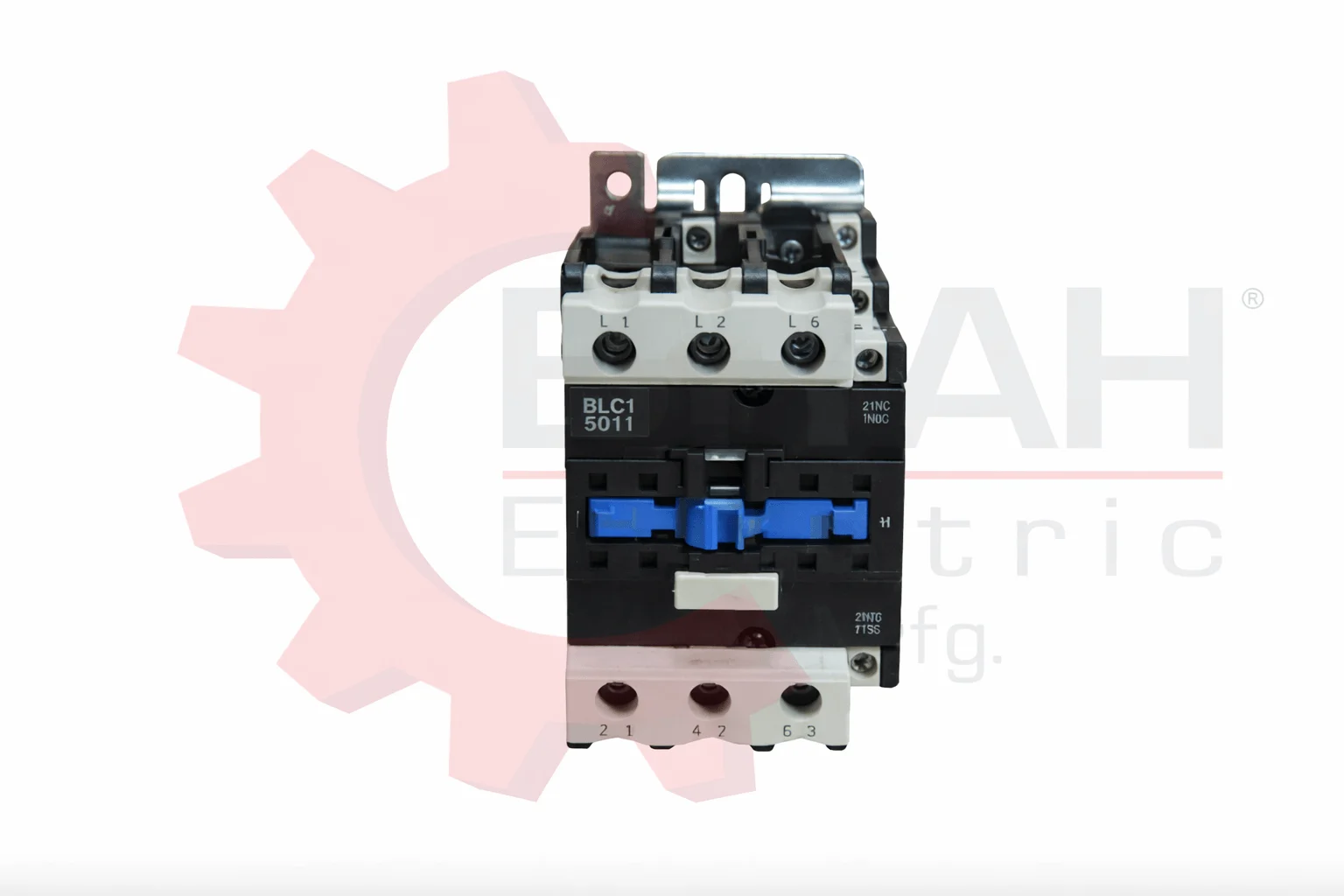
Why It Matters
Replacing a Telemecanique LC2K09 contactor might look simple on paper-but choosing the wrong substitute can lead to coil burnout, unexpected shutdowns, or even motor damage.
Most issues happen when installers match only the amperage and ignore critical details like coil voltage, auxiliary contacts, or mounting dimensions.
That’s why running a proper telemecanique lc2k09 replacement compatibility check before installation isn’t optional-it’s essential.
At BRAH Electric, our replacement contactors are engineered for seamless integration into existing systems. But even the best replacement depends on one thing: making sure it’s the right fit.
TLDR - Quick Guide
- Confirm the exact LC2K09 model suffix
- Verify coil control voltage
- Match amperage and horsepower rating
- Check auxiliary contact configuration
- Confirm mounting dimensions and terminal layout
- Inspect overload relay compatibility
- Test thoroughly before returning to service
Detailed Breakdown: Telemecanique LC2K09 Replacement Compatibility Check
Step 1 - Identify the Full Model Number
Start every telemecanique lc2k09 replacement compatibility check by confirming the full part number-including suffix letters.
These suffixes define:
- Coil voltage
- Contact configuration
- Mounting type
- Special features
Two LC2K09 units may look identical but behave completely differently in operation. Always verify the full label before sourcing a replacement.
Step 2 - Verify Coil Voltage
Coil mismatch is the #1 cause of replacement failure.
Confirm:
- Control voltage (24V, 120V, 240V, etc.)
- AC vs DC coil type
- Frequency compatibility
Installing the wrong coil voltage can prevent activation-or worse, cause overheating and early failure. A proper telemecanique lc2k09 replacement compatibility check ensures exact alignment with your control circuit.
Step 3 - Confirm Current and Horsepower Ratings
The LC2K09 is designed for specific load capacities depending on application.
Verify:
- Current (amperage) rating
- Motor horsepower rating
- Utilization category (AC-3, AC-1, etc.)
- Short-circuit withstand rating
Using an underrated contactor increases wear, overheating, and failure risk. Always match or exceed the original specifications.
Step 4 - Check Auxiliary Contact Configuration
Auxiliary contacts control logic, interlocks, and sequencing.
Inspect:
- Number of NO (normally open) contacts
- Number of NC (normally closed) contacts
- Auxiliary block placement
- Interlock requirements
A mismatch here can break control logic or prevent proper motor operation. A full telemecanique lc2k09 replacement compatibility check must include control functionality-not just power handling.
Step 5 - Confirm Mechanical Fit and Mounting
Electrical compatibility means nothing if it doesn’t physically fit.
Check:
- Mounting hole spacing
- DIN rail compatibility
- Panel clearance
- Terminal orientation
- Wire entry alignment
Even small dimensional differences can force costly panel modifications. A true drop-in replacement avoids that completely.
Step 6 - Evaluate Overload Relay Compatibility
Many LC2K09 contactors are paired with directly mounted overload relays.
Confirm:
- Mechanical fit with existing relay
- Current adjustment range
- Auxiliary integration
- Thermal vs electronic relay type
If the replacement doesn’t align, you may need to replace both components-adding cost and downtime.
Step 7 - Inspect Control Circuit Integration
Before installation, review how the contactor fits into the full system.
Confirm:
- Start/stop wiring
- Interlocks
- Safety circuits
- PLC or automation connections
A proper telemecanique lc2k09 replacement compatibility check ensures the new unit works within the entire control architecture-not just as a standalone component.
Step 8 - Perform Post-Installation Testing
Never skip testing.
Run:
- Manual coil energization
- Smooth contact engagement check
- Auxiliary contact verification
- Motor startup test
- Thermal monitoring under load
Testing confirms safe operation and prevents costly failures after restart.
Common Compatibility Mistakes to Avoid
- Matching amperage but ignoring coil voltage
- Overlooking auxiliary contact configuration
- Ignoring overload relay compatibility
- Assuming physical similarity guarantees fit
- Skipping post-installation testing
These are the exact issues that lead to downtime and premature failure.
Key Takeaways
- A telemecanique lc2k09 replacement compatibility check must include electrical and mechanical validation
- Coil voltage mismatch is the most common and costly mistake
- Auxiliary contacts and overload relay compatibility are critical
- Proper mounting alignment prevents installation headaches
- Testing ensures long-term reliability and safe operation
FAQs
1. Why is coil voltage critical when replacing an LC2K09 contactor?
The coil activates the contactor. If the voltage doesn’t match, it may fail to energize or overheat, leading to failure.
2. Can I use a higher-rated contactor as a replacement?
Yes-if it meets or exceeds requirements and still matches size, mounting, and configuration. Oversizing alone doesn’t guarantee compatibility.
3. Do I need to replace the overload relay too?
Not always. If the replacement contactor is compatible, the existing relay can remain. Always verify fit and ratings.
4. What happens if auxiliary contacts don’t match?
Control systems may malfunction or fail completely. This can affect safety interlocks and motor sequencing.
5. How do I minimize downtime during replacement?
Document specifications in advance and perform a full telemecanique lc2k09 replacement compatibility check before installation.


