


 (855) 355-2724
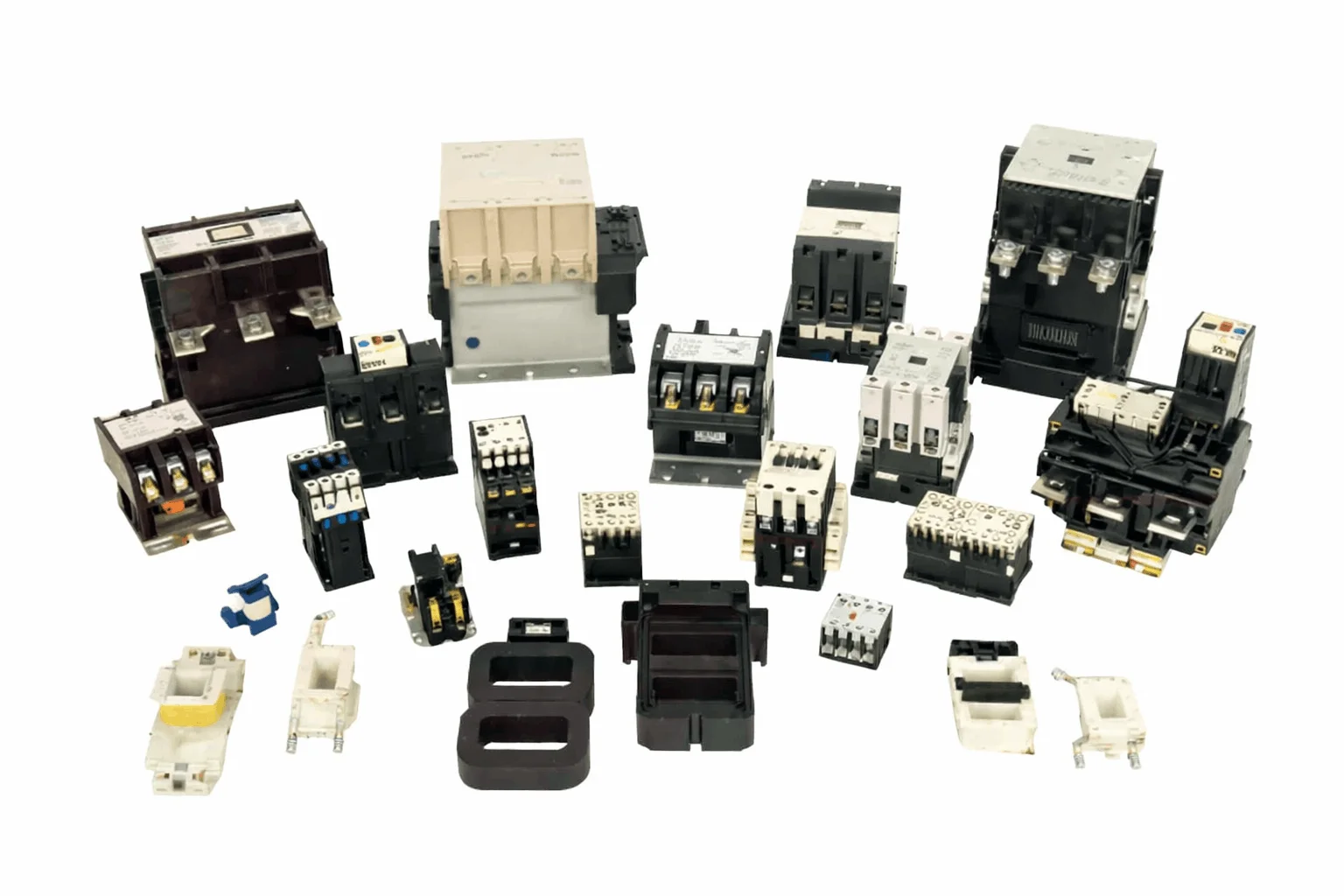
An arc chute is the part of a circuit breaker or contactor that cools and puts out the electrical arc that forms between the contacts when they open under load. It is a stack of metal plates held in an insulating housing over the contacts. The plates split the arc into shorter arcs and draw heat out of it, so the current stops quickly and the contacts are not burned away.
You may also see the name spelled “arc shoot”. This guide explains how an arc chute works, where you will find one, how to tell when it is worn out, and which arc chutes BRAH Electric sells.
Arc chutes at a glance
- An arc chute contains, splits and cools the arc drawn when contacts open under load.
- Circuit breakers and larger contactors both use them. The principle is the same, but the parts are not interchangeable.
- Replace an arc chute that is cracked, heavily burnt, missing plates or no longer seats over the contacts.
- BRAH Electric lists 12 arc chutes. All of them replace Siemens 3TY7 arc chutes on 3TF World Series contactors, sizes 3TF46 through 3TF57. Browse them under Motor Controls arc chutes.
- An arc chute is specific to one device size. Order by the part number of the chute or by the contactor it sits on.
How an arc chute works
When a set of contacts opens while current is flowing, the current does not stop at once. It jumps the gap as an arc. The arc is very hot, and for as long as it burns it erodes the contact surfaces and keeps the circuit conducting.
The arc chute sits directly above or around the contacts. As the contacts part, the arc is pushed outward into the chute, helped by the shape of the contacts and by the magnetic field of the current itself. Inside the chute the arc meets a row of metal plates, often called splitter plates or de-ion plates. The plates do three things:
- They divide one long arc into several short arcs in series, which together need more voltage to keep burning than the circuit can supply.
- They absorb heat, which cools the arc.
- They stretch the arc path, which raises its resistance.
On an AC circuit the current passes through zero twice in every cycle. A cooled, divided arc does not re-strike after one of those zero crossings, and the circuit is open. The housing around the plates is made of an insulating, heat-resistant material. It keeps the arc and the hot gas away from the neighboring poles and from nearby grounded metal.
Where arc chutes are found: circuit breakers and contactors
Circuit breakers. A breaker has to interrupt fault current as well as normal load current, so each pole has its own arc chute. In small molded case breakers the chutes are sealed inside the case and are not serviced. On larger breakers that are built to be maintained, the arc chutes can be removed for inspection and are sold as replacement parts for that breaker frame.
Contactors. A contactor opens and closes a motor or other load circuit many times over its life, and every opening under load draws an arc. On larger contactors the arc chute is usually a removable cover that fits over the main contacts. Taking it off is how you get to the contacts to inspect or change them. A contactor should not be operated under load with its arc chute removed.
An arc chute is shaped for the contact spacing, pole layout and housing of one device. A chute from a different frame size or product line will not seat properly, even when it looks similar.
Signs an arc chute needs replacing
Inspect the arc chute whenever the device is opened for maintenance, when the contacts are replaced, and after the device has cleared a heavy fault. Replace it when you find any of the following:
- Cracks, chips or broken pieces in the housing.
- Splitter plates that are missing, loose, bent or burnt away at the edges.
- Beads of metal bridging the gaps between plates.
- Heavy soot or carbon tracks across the insulating surfaces that do not wipe off.
- A housing that is warped by heat, or that no longer seats and fastens squarely over the contacts.
Light discoloration and a thin film of soot are normal on a chute that has been in service. Badly worn contacts and a damaged arc chute are often found together, because each makes the other worse. When you fit a new contact kit, look closely at the chute as well.
BRAH arc chutes for Siemens 3TF contactors
BRAH Electric’s arc chutes are contactor parts, not breaker parts. The catalogue lists 12 of them, and each is a direct substitute for one Siemens 3TY7 arc chute used on a 3TF World Series contactor. There is one arc chute for each contactor size from 3TF46 through 3TF57. The BRAH part number is the Siemens number with a B in front.
| BRAH arc chute | Replaces Siemens | Fits contactor |
|---|---|---|
| B3TY7462-OA | 3TY7462-OA | 3TF46 |
| B3TY7472-OA | 3TY7472-OA | 3TF47 |
| B3TY7482-OA | 3TY7482-OA | 3TF48 |
| B3TY7492-OA | 3TY7492-OA | 3TF49 |
| B3TY7502-OA | 3TY7502-OA | 3TF50 |
| B3TY7512-OA | 3TY7512-OA | 3TF51 |
| B3TY7522-OA | 3TY7522-OA | 3TF52 |
| B3TY7532-OA | 3TY7532-OA | 3TF53 |
| B3TY7542-OA | 3TY7542-OA | 3TF54 |
| B3TY7552-OA | 3TY7552-OA | 3TF55 |
| B3TY7562-OA | 3TY7562-OA | 3TF56 |
| B3TY7572-OA | 3TY7572-OA | 3TF57 |
The arc chutes in the table cover 3TF46 through 3TF57. For any other size or equipment, call (855) 355-2724 with the part number. The full listing is on the arc chutes page. BRAH Electric is an aftermarket manufacturer and is not an authorized Siemens distributor.
Before you order: what to check
- The contactor size. Read the order number on the contactor nameplate, for example 3TF4822-0AK6. The first five characters (3TF48) are the size you match in the table above.
- The number on the old chute. If the arc chute carries its own 3TY7 number, match that as well.
- The product line. Each of these parts is listed for one 3TF contactor size only, so match the size on the nameplate.
- The contacts. If the chute is burnt, check the main contacts at the same time. BRAH lists 3TY7 contact kits for the 3TF44 through 3TF57 sizes.
- The whole contactor. If the housing or the coil is damaged too, a complete replacement contactor may be the simpler repair.
Related parts for the same contactors are under contact kits, magnetic coils and contactors. The guide to Siemens 3TF contactor replacements lists every 3TF size BRAH carries, and the guide on when to replace contact kits covers contact wear.
BRAH parts carry a 2-year warranty from the date of invoice (contact kits: 6 months). In-stock orders placed before 3:00 PM Pacific ship the same business day. If you cannot identify the part, call (855) 355-2724, Monday to Friday, 6AM to 5PM Pacific.
Safety when inspecting or changing an arc chute
Removing an arc chute exposes the main contacts and the line and load terminals. De-energize the equipment, apply lockout/tagout to every source including the control circuit, and verify the absence of voltage before you touch anything. The work should be done by qualified personnel. Refit the arc chute and its fasteners before the equipment is re-energised.
Arc chute FAQs
Is it “arc chute” or “arc shoot”?
The part is an arc chute. A chute is a channel that guides something, and here it guides the arc away from the contacts. “Arc shoot” is a common misspelling of the same part.
What does an arc chute do in a contactor?
It covers the main contacts and puts out the arc each time the contactor opens under load. That limits contact wear and keeps the arc from reaching the adjacent poles or the enclosure.
Can I run a contactor without its arc chute?
No. Without the chute the arc is not contained or cooled. It can burn the contacts and can flash over between poles. Fit the chute before the contactor is put back under load.
Can I replace the arc chute without replacing the whole contactor?
On the 3TF46 through 3TF57 sizes, yes. The arc chute is listed as a separate part, so a contactor with a sound base, coil and contacts can be kept in service with a new chute.
Are arc chutes interchangeable between contactor sizes or brands?
No. Each one is made for a single device size. In the BRAH catalogue every arc chute is listed against one 3TF contactor size only.
Does BRAH Electric sell arc chutes for circuit breakers?
Not at present. The 12 arc chutes in the catalogue are all for Siemens 3TF World Series contactors. For breaker parts that BRAH does carry, see circuit breaker parts.
References
- OSHA 29 CFR 1910.147, The control of hazardous energy (lockout/tagout).
- OSHA 29 CFR 1910.333, Selection and use of work practices for electrical work, including de-energizing and verification.
- NFPA 70B, Standard for Electrical Equipment Maintenance.
- IEC 60947-4-1, Low-voltage switchgear and controlgear: electromechanical contactors and motor-starters.